

A sudden wall of brake lights on I-75 near Lima can quickly turn into several crashes. You might get hit from behind, then from the side, and not know who started it.
In Ohio, liability in a multi-car pileup is not always placed on the first or last driver involved. Instead, the state considers what each person did, whether their actions contributed to the injuries or damage, and how fault should be shared.
In a serious pileup, the order of impacts can be as important as where the cars end up because more than one driver may be legally responsible for the same injury.
If you’re struggling to determine liability after an I-75 crash, don’t face the insurance companies alone. Contact an experienced car accident lawyer today to protect your rights and explore your legal options.
Is the Driver Who Triggered the Pileup Liable for Every Impact?
No. The driver who starts a pileup may be largely responsible, but that does not mean they are automatically responsible for every crash that happens afterward.
Picture a car losing control and blocking a lane. The next driver stops in time, but a third driver, driving too close, crashes into the stopped car, pushing it forward. The first driver may have created the initial hazard, while the third driver’s following distance may have contributed to a separate impact.
The opposite can happen, too. If a driver makes a sudden, unsafe move, the drivers behind may not have a chance to avoid a crash. Determining liability in a multi-car pileup starts with the sequence of events, not simply which vehicle made first contact.
How Can Chain-Reaction Crash Liability Be Split Among Several Drivers?
In Ohio, fault can be split among several people rather than assigned entirely to one driver. In a lawsuit, percentages can be assigned to the plaintiff, defendants, and even certain people the plaintiff did not sue if a defendant properly raises that issue. Those percentages must total 100%.
Ohio’s comparative-fault rule also affects what an injured person can recover. If your fault is not greater than the combined fault of others, you may still recover compensatory damages, but your percentage of responsibility reduces the award. If your share exceeds 50%, recovery is barred.
For example, if a jury finds you 20% at fault, Driver B 45%, and Driver C 35%, a $100,000 award would be reduced by your 20% share. You could recover $80,000 before other legal or insurance factors.
That is why chain-reaction crash liability depends on more than identifying the vehicle that made first contact.
What Changes When One Defendant Is More Than 50% Responsible?
This is different from the rule that can bar a plaintiff who is more than 50% at fault. When two or more people cause the same injury or loss and more than 50% of the tortious conduct is attributable to one defendant, Ohio allows you to hold that defendant liable for all recoverable economic damages.
If one defendant is found more than 50% at fault, that person can be held responsible for all economic losses from the injury. Economic losses include medical bills, lost wages, and other out-of-pocket costs. In an ordinary negligence case, defendants assigned 50% or less are generally responsible only for their proportionate shares of damages.
If no one is found to be more than 50% at fault, then each individual typically bears only their own portion of the economic losses. Noneconomic damages, such as pain, suffering, or mental anguish, are also allocated according to each person’s percentage of fault.
The important point is that a defendant’s percentage can affect more than the label of “fault.” In some multi-defendant cases, it also changes the allocation of responsibility for economic damages.
Can a Later Impact Create Separate Liability for Your Injuries?
If you were hit twice, the legal question is not only who started the pileup. It may also be which impact caused an injury, which impact made it worse, or whether several impacts combined to produce harm that cannot reasonably be separated.
One impact may cause an initial injury while a later impact aggravates it. In other cases, several impacts combine to cause the same injury and cannot be neatly separated.
Reconstructing that sequence might involve more than just a photograph of the final vehicle positions. Damage patterns, medical records, witness accounts, video footage, and vehicle data can assist in identifying which impact caused or exacerbated an injury. This causation analysis can influence the parties involved in the claim and the allocation of responsibility.
Which Evidence Can Reconstruct the Seconds Between Impacts?
The most helpful evidence in a pileup usually shows the order of events. A driver might remember the first impact but not be aware of what happened several cars back.
Useful evidence may include:
- Impact-by-impact account. Write down what you remember about the first, second, and later impacts while the sequence is fresh in your mind.
- Full-scene photographs and video. Preserve vehicle resting positions, lanes, debris, skid marks, weather conditions, and nearby mile markers or exits.
- Dashcam or other video. Save the original footage promptly.
- Vehicle damage and available electronic data. Damage patterns and retrievable vehicle data may help investigators analyze direction of force, braking, speed changes, or vehicle movement.
- Crash report and witness information. Obtain the OH-1 report and preserve any separate witness information so the accounts can be compared with the physical evidence.
No single piece of evidence necessarily settles fault. But together, these details can help reconstruct what happened in a crash that was too fast for anyone to see fully.
Why Doesn’t a Fault Percentage Tell You How Much Insurance Is Available?
A percentage of legal responsibility does not tell you how much insurance money is actually available. Liability coverage generally pays on behalf of an insured for covered injuries or property damage the insured is legally responsible for causing, subject to the policy’s terms and limits.
A pileup can include multiple liability policies, injured individuals, and coverage limits. If an at-fault driver is uninsured or does not have enough liability coverage, your own uninsured or underinsured motorist coverage may become relevant if you purchased it and the policy covers the loss.
Do not assume dividing fault automatically shows how much coverage is available or where each claim should be presented. Both the policies and complete fault allocation matter.
When Is an I-75 Pileup Too Complex to Leave to Competing Insurers?
A serious pileup often needs an independent investigation when drivers give conflicting accounts, multiple insurers blame one another, injuries are significant, or the crash involves a commercial vehicle or several separate impacts.
Bensinger Legal Services is based in Lima and represents injured people across Ohio. Aaron Bensinger has extensive experience in personal injury and civil litigation in Ohio and California, including favorable jury verdicts in both states.
If you were injured in an I-75 pileup, we can examine the collision on a per-impact basis, identify who may share responsibility, evaluate the available insurance, and preserve evidence before competing versions of the crash harden into competing claims. Schedule a free consultation to discuss what happened and what the evidence may show.
Legal References Used to Inform This Page:
To ensure the accuracy and clarity of this page, we referenced official legal and other resources during the content development process:
- Ohio Revised Code Section 2315.33, Contributory Fault Effect on Right to Recover.
- Ohio Revised Code Section 2315.18, Compensatory Damages in Tort Actions.
- Ohio Department of Insurance, Automobile Insurance Guide.
- Ohio Revised Code Section 2307.23, Determining Percentage of Tortious Conduct Attributable to Party in Tort Action.
- Ohio Revised Code Section 2307.22, Joint and Several Tort Liability.
- Ohio Administrative Code Rule 4501-31-01, Reports of Motor Vehicle Accidents.
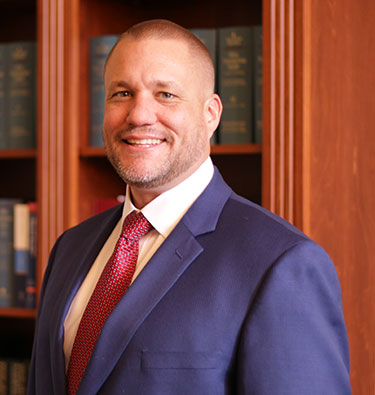
Aaron L. Bensinger is an Ohio attorney serving personal injury and civil litigation clients. He has extensive trial experience and makes client service is his primary focus. As a partner at Balyeat, Leahy, Daley, Miller & Bensinger, LLC, Aaron happily works in Lima, OH, and serves the entire Northwest region of the state and beyond.