

Identifying the responsible party can be difficult after any car accident, but it becomes more complicated when three or more vehicles are involved.
In a multi-car accident, one driver might be completely at fault, but there is a greater likelihood that two or more drivers will share liability for the accident.
Before insurance payment can be determined, you need to know which drivers are at fault. If you need help identifying who is at fault in a multi-car accident, contact an experienced Ohio auto accident attorney.
Please call (419) 455-1410 or submit our online form today for a free consultation.
Key Points
- • In Ohio multi-car accidents, fault is rarely assigned to just one driver — liability is determined by proving negligence through four elements: duty, breach, causation, and measurable damages.
- • Ohio uses comparative negligence to determine which insurance pays — each at-fault party is assigned a percentage of blame, and their insurance is responsible for that share of your total damages.
- • If you are more than 50% at fault in a multi-car accident, you cannot recover any compensation — but if you are 50% or less at fault, your recovery is reduced only by your percentage of responsibility.
- • Common causes of multi-car pile-ups include distracted driving, tailgating, speeding, aggressive driving, drunk driving, poor weather conditions, and medical events — any factor that slows a driver’s reaction time can trigger a chain-reaction crash.
- • An experienced Ohio car accident attorney can identify all at-fault parties and hold each one accountable — protecting your right to the maximum compensation available across multiple insurance policies.
How Is Fault Determined in Ohio?
In multi-car accidents, there is typically a shared responsibility, and very rarely is a single driver at fault. Fault is determined by identifying the negligent party or parties after an accident.
This involves proving four elements:
- Duty,
- Breach,
- Causation, and
- Damages.
Duty is defined as the standard of behavior a reasonable person would use in the same or similar circumstance. For example, if most drivers would reduce speed on the highway during a snowstorm even when not explicitly told to do so, a driver who drives too fast for the conditions is breaching the duty owed to everyone else on the road.
Simply breaching a duty is not enough to prove negligence. You must also show that the breach of duty caused the accident and your damages. For example, if the driver speeding on the highway during a snowstorm hits ice and crashes into another vehicle, they have now caused physical harm as a result of the duty they breached.
If the injured driver has measurable damages such as injuries or necessary repairs to their vehicle, then all four elements of negligence have been met and the speeding driver will be found liable for the accident.
Negligence principles apply the same in two-vehicle and multi-vehicle collisions, with the potential for shared responsibility if more than one driver is at fault.
In an accident where another driver hits you and causes you to hit another car, that driver is typically at fault. This is because all drivers are expected to maintain a safe distance between their vehicle and the vehicle in front of them.
However, just because this driver is at fault does not mean that the car you hit will not file a claim to recover damages from you. To help establish liability and hold the negligent driver accountable, you should enlist the help of an experienced car accident attorney.
Who Is at Fault in a Rear-End Collision Involving 3 Cars in Ohio?
Generally, the rear driver is assumed to be at fault in a rear-end collision. Ohio law restricts drivers from traveling at a speed greater than will allow for a stop within the clear distance ahead. So if someone is following the car in front of them too closely or driving too fast to stop if the car in front of them brakes, they will likely be considered negligent.
The lead driver, rather than the rear driver, may be at fault in a few circumstances.
These include:
- If the lead driver is intoxicated,
- If the lead driver abruptly reverses,
- If the lead driver does not have working brake lights,
- If the lead driver breaks down and does not use warning lights,
- If there was an unsafe lane change, and
- If there was a pile-up.
Thus, who is at fault in a rear-end collision involving 3 cars depends on the circumstances of the collision. An experienced attorney can help you identify who is liable for your injuries.
Whose Insurance Pays in a Multi-Car Accident?
You are probably asking, How does insurance work in a multi-car accident? In Ohio, the answer is based on who has been negligent. Ohio uses comparative negligence to determine who pays damages to whom. In comparative negligence, percentages of blame are assigned to each party found to be at fault in an accident.
If three parties are in an accident, all parties’ insurance may be liable for damages. The only limiting factor in recovering damages is if an injured party is more than 50% liable for the crash. In that case, the injured party could not recover from any other party but is still liable for damages.
Let’s consider an example of how this might work in practice. Person A, who was injured in a crash with car B and truck C has multiple parties they can recover from. If A’s total damages are $100,000 and A is found to be 20% negligent in causing the accident, this limits Person A’s total recovery amount to $80,000. However, if A is more than 50% responsible for the multi-car crash, they will not be able to recover anything.
If both B and C were also negligent, then the $80,000 recovery amount available for A will be allocated by percentage between the two other drivers. If B was 35% negligent, C was 45% negligent, and the total damages are $100,000, then A can hypothetically recover $35,000 from B and $45,000 from C.
An experienced car accident attorney can help you identify who is at fault and whose insurance is responsible for your multi-car accident.
What Are the Common Causes of Multi-Car Accidents?
A number of different factors can lead to a multi-vehicle accident or pile-up. Let’s take a look at some of the most common.
Poor Weather Conditions
Inclement weather, such as snow, rain, ice, and fog, reduces traction and visibility. Over the past five years, most car accidents in Ohio have occurred during the winter. Failing to adjust to these conditions properly can lead to losing control. When multiple vehicles fail to address these conditions and lose control, multi-vehicle accidents can occur.
Speeding
Speed limits are set for a reason. Driving over the speed limit reduces a driver’s ability to react to change. This slower reaction time increases the likelihood of an accident involving multiple vehicles.
Distracted Driving
Talking on the phone, texting, eating, and even drinking are all activities that can divert attention from driving. Anything that distracts a driver from the road—even passing snacks to the backseat—can cause an accident. A distracted driver cannot react quickly enough to swerve from a crash or other obstacle ahead and can cause or add to a multi-car accident.
Aggressive Driving
Speeding and weaving in and out of traffic can lead to a multi-car accident. When other drivers are forced to react quickly to a vehicle driving aggressively, there is a chance of an accident.
Tailgating
Tailgating is following too closely to the bumper of the car in front of you. Without allowing an appropriate distance between vehicles, you impact your ability to react to changing road and traffic conditions. This shortening of reaction distance can cause a multi-car crash.
Drunk Driving
Driving under the influence of alcohol or drugs, impacts reaction time, impairs judgment and coordination, and contributes to the likelihood a crash will occur.
Any factor that reduces a driver’s ability to react to change can cause a multi-car accident. When more individuals are involved, it can be more challenging to identify who is at fault in a multi-car accident.
Medical Conditions
A driver operating a vehicle with a medical condition that can impact their response time can also cause a multi-car accident or worsen an accident by failing to stop on time.
Frequently Asked Questions
How does insurance work in a multi-car accident in Ohio?
Ohio uses a comparative negligence system to determine who pays in a multi-car accident. Each driver involved is assigned a percentage of fault based on their individual actions. A driver’s liability insurance is responsible for paying damages proportional to their share of fault. If multiple drivers are at fault, multiple insurance policies may contribute to compensating injured victims. A driver who is more than 50% at fault under Ohio law cannot recover compensation from the other parties, but remains liable for the damages they caused.
What if the at-fault driver in a multi-car accident doesn’t have insurance?
If an at-fault driver has no insurance, injured victims cannot recover from that driver’s policy. They may still be able to file claims against other at-fault drivers who do have insurance. They may also be able to file an uninsured motorist (UM) claim under their own auto policy, if they purchased that coverage. Ohio law does not require drivers to carry UM coverage, and insurance companies are no longer mandated to offer it, making it entirely optional but highly recommended to add to your policy.
What are Ohio’s minimum car insurance requirements?
Ohio requires all drivers to carry at least $25,000 in bodily injury liability per person, $50,000 per accident, and $25,000 in property damage liability — commonly written as 25/50/25. These are minimums only. In a serious multi-car accident, minimum limits can be exhausted quickly, particularly when multiple people are injured.
Does the statute of limitations apply differently in a multi-car accident?
No. The standard Ohio statute of limitations for personal injury claims applies to multi-car accidents the same as any other car accident. Under Ohio Revised Code Section 2305.10, injured victims generally have two years from the date of the accident to file a personal injury lawsuit. The number of parties involved does not extend or shorten that deadline. Property damage claims also carry the same two-year deadline.
What is a pile-up and how is fault determined in one?
A pile-up is a chain-reaction crash involving multiple vehicles. Ohio’s negligence rules apply the same way in a pile-up as in any multi-car accident — each driver’s conduct is evaluated individually to determine their share of fault. A driver who had adequate following distance and no warning may bear no fault. A driver who was tailgating or distracted before the chain reaction may bear significant fault. Because the sequence of events in a pile-up happens quickly, evidence such as dashcam footage, witness statements, and official crash reports is especially important for establishing what each driver did and when.
Can I file a claim against my own insurance in an Ohio multi-car accident?
Yes, in certain situations. If one or more of the at-fault drivers is uninsured or underinsured, you may be able to file a claim under your own uninsured motorist (UM) or underinsured motorist (UIM) coverage, if you purchased it. You may also have medical payments coverage (MedPay) on your policy that helps pay medical bills regardless of fault. Each of these coverages is separate from liability coverage and has its own terms and limits set by your specific policy.
Reach Out to Bensinger Legal Services For Help Identifying Whose Insurance Pays in a Multi-Car Accident
If you’ve been injured and need help identifying whose insurance pays in a multi-car accident, contact experienced attorney Aaron Bensinger at Bensinger Legal Services, at your earliest convenience. Let Aaron and his team help you get your life back. They can focus on the details while you focus on healing.
Get started with a free consultation by calling (419) 455-1410 or sending an online message today.
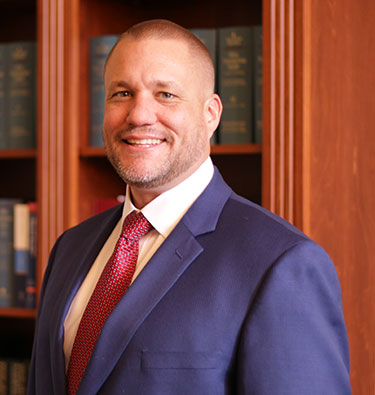
Aaron L. Bensinger is an Ohio attorney serving personal injury and civil litigation clients. He has extensive trial experience and makes client service is his primary focus. As a partner at Balyeat, Leahy, Daley, Miller & Bensinger, LLC, Aaron happily works in Lima, OH, and serves the entire Northwest region of the state and beyond.