

After a fatal truck crash, families are often left with questions about what caused the collision, whether it could have been prevented, and who may be legally responsible. Ohio wrongful death laws for truck crashes give surviving family members a way to pursue compensation when a truck driver, trucking company, or another party’s negligence causes a death.
At Bensinger Legal Services, LLC, we can step in early to investigate, protect important evidence, deal with the companies and insurers involved, and explain what Ohio law means for your family.
Attorney Aaron Bensinger combines experience handling serious litigation with the personal attention of a local Ohio practice, so you can speak with someone who knows how to build a case without feeling like just another file.
If you need answers about what happened and what your family can do next, we are here to help you get them.
When Does a Fatal Truck Crash Qualify as Wrongful Death in Ohio?
A fatal truck crash may qualify as wrongful death when someone else’s negligence or wrongful conduct caused the death. In other words, if the person who died could have brought a personal injury claim had they survived, Ohio law may allow a wrongful death claim to be brought.
In a truck crash, that negligence may involve:
- Speeding or unsafe driving,
- Distracted driving,
- Driver fatigue,
- Poor truck maintenance,
- Unsafe cargo loading, and
- Negligent hiring or supervision.
Determining whether a fatal crash meets Ohio’s wrongful death standard requires showing that negligent conduct caused the collision and the death. Evidence such as electronic truck data, driver logs, maintenance records, witness statements, and crash reconstruction may help establish that connection.
Who Can Bring a Wrongful Death Claim in Ohio?
In Ohio, surviving family members do not usually file separate wrongful death lawsuits themselves. The personal representative of the deceased files the lawsuit. This is typically the executor named in the person’s will or an administrator appointed by the probate court. That representative brings the Ohio fatal truck accident lawsuit on behalf of eligible surviving family members.
A surviving spouse, children, and parents are generally presumed under Ohio law to have suffered losses because of the death.
Other next of kin may also be able to receive compensation, but they usually need to show how the death affected them personally. Ohio defines “other next of kin” as the closest surviving relatives after accounting for the spouse, children, and parents. This may include siblings and grandparents.
What Damages Can a Family Recover After a Fatal Truck Crash?
Ohio wrongful death laws allow compensation for the financial and personal losses that surviving family members suffer because of the death. The recovered amount will be distributed to the beneficiaries based on their relationship to the deceased and evidence of the loss.
Recoverable damages may include:
- Loss of financial support. A family may recover the financial support that the deceased person would reasonably have provided, based on their expected earning capacity. Employment history, income, benefits, age, and expected future earnings may help establish this loss.
- Loss of services. Ohio law recognizes the value of services the person provided to the household or family, even when those contributions did not produce income. This could include childcare, household work, transportation, caregiving, or other regular responsibilities.
- Loss of society. This category covers the personal relationship the family has lost, including companionship, consortium, care, assistance, attention, protection, advice, guidance, instruction, and education.
- Loss of prospective inheritance. Heirs may recover the value of an inheritance they reasonably could have expected to receive had the person lived.
- Mental anguish. A surviving spouse, dependent children, parents, and other qualifying next of kin may seek compensation for the emotional suffering caused by the death.
Ohio law also permits recovery of reasonable funeral and burial expenses resulting from the wrongful death. These expenses are addressed separately from the losses suffered individually by family members.
How Do I Prove the Trucking Company’s Liability for the Fatal Crash?
Under Ohio law, a trucking company may be held responsible for its employee-truck driver’s negligence when the employee was acting within the scope of employment. For example, if a company driver negligently causes a crash while making a scheduled delivery, the trucking company may be liable for the driver’s conduct.
The company may also be responsible for its own negligence. Depending on what caused the crash, that could involve hiring or retaining an unsafe driver, inadequate supervision, failing to maintain the truck, or disregarding commercial motor vehicle safety requirements.
Evidence that may help establish what the driver or trucking company did wrong includes:
- Electronic logging records. These can show the driver’s on-duty hours, rest periods, and whether fatigue or hours-of-service violations may have contributed to the crash.
- Driver qualification and employment records. Applications, driving histories, training materials, prior safety issues, and company records may show what the carrier knew about the driver and how the driver was supervised.
- Inspection and maintenance records. Repair orders, inspection reports, and maintenance histories can help determine whether problems with brakes, tires, steering, lights, or other equipment existed before the collision.
- Electronic truck and dispatch data. Engine control module data, GPS information, telematics, dispatch communications, and onboard cameras may help establish speed, braking, vehicle movement, and events leading up to impact.
- Crash-scene evidence. Photographs, surveillance footage, witness accounts, physical damage to the vehicle, and accident reconstruction can help link the driver’s or the company’s conduct to the fatal collision.
The trucking company is not necessarily the only business whose conduct should be examined.
- Truck manufacturer. A defective tire, brake component, steering part, or other equipment could support a claim against a manufacturer.
- Maintenance provider. A repair or maintenance provider may be responsible if negligent service contributed to a mechanical failure.
- Cargo loader. A company that loaded the trailer may bear responsibility when improperly secured or unbalanced cargo caused or contributed to the crash.
We can examine the truck, company records, maintenance history, cargo documents, contracts, and other evidence to determine which businesses were involved and what role each played.
How Long Do You Have to File an Ohio Wrongful Death Lawsuit?
Ohio generally requires a wrongful death action to be commenced within two years after the decedent’s death. The date of death matters. When someone survives a truck crash for a period before later dying from the injuries, the wrongful death deadline generally runs from the death rather than automatically from the collision date.
If you fail to file by the deadline, absent certain exceptions, you are generally barred from recovery.
Talk to Bensinger Legal Services About an Ohio Fatal Truck Accident Lawsuit
After a fatal truck crash, your family should not have to sort through unfamiliar legal rules while also dealing with the loss itself. Ohio wrongful death laws for truck crashes can affect who may bring the claim, what compensation is available, and how long you have to act. Having an attorney who can explain those issues clearly and take responsibility for the legal process can give your family one less thing to carry.
Bensinger Legal Services gives families the benefit of serious litigation experience without sacrificing personal attention. Aaron has extensive experience handling personal injury and civil litigation in Ohio, including cases in state and federal court, and he is prepared to take a case to trial when necessary.
He gives each client individual attention rather than treating them as another case in a high-volume practice. In a fatal truck crash claim, that means having an attorney who can take on disputed liability, complex evidence, and aggressive defense strategies while staying closely involved with your family throughout the case.
You should not have to sort through these legal questions on your own while your family is dealing with a loss. Contact Bensinger Legal Services for a free case review. We can listen to what happened, explain your rights, and help you determine the best way to move forward.
Legal References Used to Inform This Page
To ensure the accuracy and clarity of this page, we referenced official legal and other resources during the content development process:
- Action for wrongful death. Ohio Revised Code § 2125.01.
- Parties – damages. Ohio Revised Code § 2125.02.
- Distribution to beneficiaries. Ohio Revised Code § 2125.03.
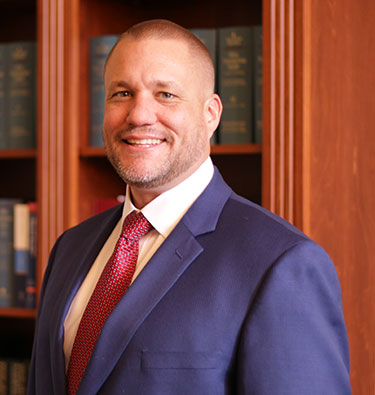
Aaron L. Bensinger is an Ohio attorney serving personal injury and civil litigation clients. He has extensive trial experience and makes client service is his primary focus. As a partner at Balyeat, Leahy, Daley, Miller & Bensinger, LLC, Aaron happily works in Lima, OH, and serves the entire Northwest region of the state and beyond.